Facelift Myths - Beauty and the Surgeon Episode 133
If you’ve spent any time researching facelifts, you’ve probably been told there is one superior facelift technique — usually the deep plane facelift. According to the internet, if you’re not getting a deep plane, a ponytail lift, or whatever is trending at that moment, you’re basically wasting your time.
Let’s bust that myth.
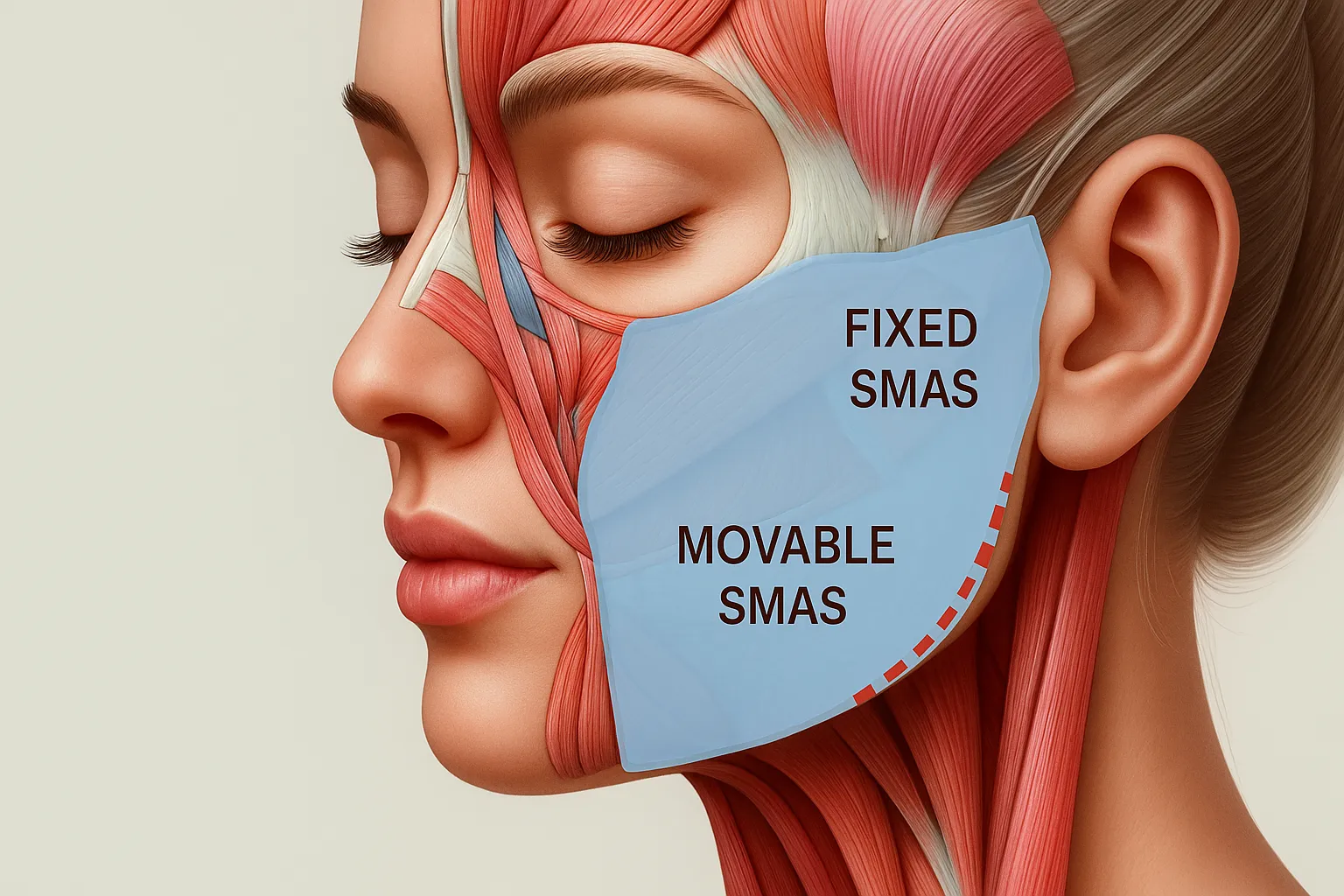
When we talk about facelift techniques, we’re really talking about how we treat the foundation layer under the skin — the SMAS (superficial musculoaponeurotic system). Deep plane, SMAS plication, SMASectomy… they’re all different ways of working on that same foundation. The key is not the approach; rather it’s whether the approach makes sense for your anatomy.
The Foundation Layer: Where the Real Lift Happens
A good facelift is not a skin-tightening exercise. The magic happens in the deep, aka SMAS layer. This is the fibrous-muscular layer, deep to your skin and subcutaneous fat, that supports your cheeks, jowls, and jawline. And this layer loosens with age, just like your skin.
Think of the SMAS as the scaffolding of a wall underneath the wallpaper in your house. And in this analogy, the wall AND the wallpaper sag and become loose with time. If we only pull the wallpaper tighter, the wall still sags. When we actually tighten and reposition the scaffolding of the wall iteself, the surface looks smoother and stays that way for a long long time. If you have ever tried to apply wallpaper, you quickly realize that it has no real strength. Therefore the actual change ultimately comes from lifting and supporting the scaffolding of the wall.
Different facelift styles are basically different ways of adjusting this scaffolding:
-
Deep plane facelift – lifting the skin and SMAS together in a deeper plane
-
SMAS plication – folding and tightening the SMAS like a well-placed tuck
-
SMASectomy – removing a strip of SMAS and suturing the edges for a lift
If we are being transparent, all these techniques, live int the same neighborhood, you just have to take slightly different routes to get there. And per the data, the results really don’t differ much. See below.

Myth: The Deep Plane Facelift Is Always Superior
Here’s the plot twist: a deep plane facelift isn’t automatically “better” — it’s just one tool in a well-stocked toolkit.
Deep plane facelifts can be fantastic for certain faces, especially when we want powerful lifting in the midface and jawline. But:
-
Some people actually benefit more from SMAS plication or *SMASectomy*
-
Others need a neck lift, brow lift, or eyelid surgery more than an ultra-aggressive facelift
-
Many do best with a custom blend of techniques rather than one “pure” operation. By the way, this is what we offer most often.
What you see online is often marketing adjacent, not a new species of surgery. “Ponytail facelift,” “vertical vector lift,” “signature deep plane,” “high SMAS”—most of these are clever names wrapped around variations of well-established techniques. And people are actually surprised to find out that the deep plane technique was popularized in the 1990’s. Thirty years ago. So there is not much new there besides intermittent updates that each surgeon makes.
The honest truth?
There is no actual winner in facelift surgery techniques.
There is only the right operation for your individual anatomy.
Check out this Tik Tok on dealing with the foundation
So… What’s the Difference Between Deep Plane and SMAS Techniques?
Let’s oversimplify (in a good way):
Deep Plane Facelift
-
Works under the SMAS layer
-
Moves skin, fat, and SMAS together as a unit
-
Great for certain midface and cheek patterns
-
Can sometimes be quicker for experienced surgeons (yes, really)
SMAS Plication / SMASectomy (SMAS Facelifts)
-
Work on or within the SMAS layer
-
Tighten or fold the SMAS to lift the jawline and around your mouth
-
Very powerful for many lower-face and neck aging patterns
-
Time-tested with excellent long-term results
Here’s the key:
When done well, all of these approaches can give long-lasting, natural-looking results. The outcome depends far more on planning, execution, and judgment than on which marketing adjacent term shows up on your quote. And just for full disclosure, we use some of these terms too. It can be difficult to convey to a patient your surgical plan without using these words. So, this is why it is so important to first find an expert surgeon that understands your aesthetic vision before focusing on wheter he or she uses the right words.
How a Good Surgeon Actually Chooses the Technique
When you come in for a facelift consultation, we’re not thinking, “How do I sell this person a deep plane?”
We’re thinking:
-
How have your cheeks, jawline, and neck aged?
-
Do you need more vertical lift in the midface, more backward pull along the jaw, or more tightening in the neck?
-
Is your biggest issue skin laxity, muscle banding, volume loss, or all three?
-
What’s your health, downtime tolerance, and long-term goal?
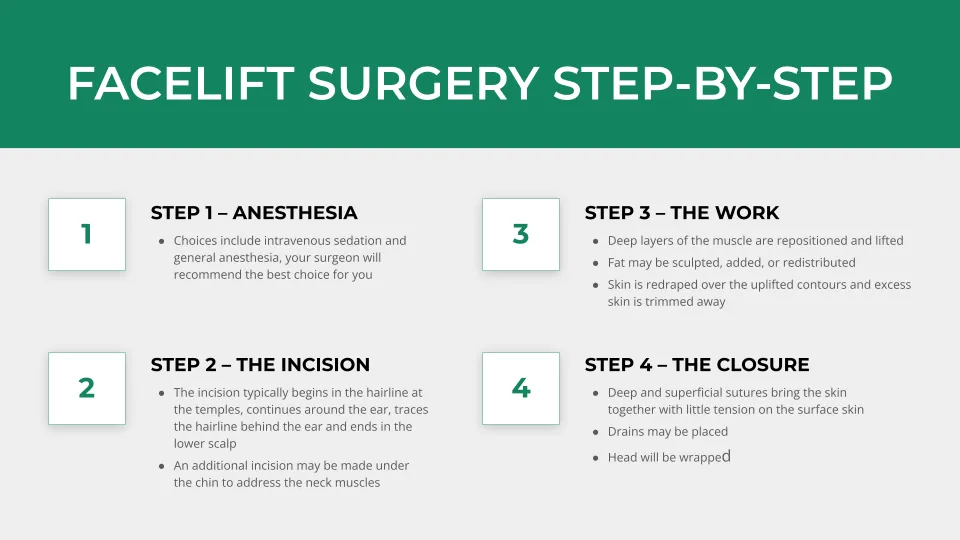
Then we build a plan that might include:
-
Full facelift, mini facelift, or primarily a neck lift
-
SMAS plication, SMASectomy, deep plane maneuvers — or a hybrid
-
Adjuncts like fat grafting, eyelid surgery, or brow lift
That’s what real facelift customization looks like. Not, “Everyone gets a deep plane because that’s what’s trending this year.” We often analogize this to hiring a custom contractor. If you are paying them top dollar to build your custom home, then that is what you should get in the end. Not a repeat of a house they built last year.
Beware of Buzzwords and “Unicorn” Procedures
If a surgeon’s entire message is, “I do the superior facelift and everyone else is outdated,” that’s a red flag.
A few things to watch for:
-
Overpromising (“This one technique is the only way to get a natural result”)
-
Upcharging because the name sounds fancier, even though the operative time/complexity may be similar
-
Minimal discussion of alternatives or nuance in technique
On the other hand, green flags:
-
They explain how they’ll treat your SMAS layer and *why*
-
They’re comfortable with multiple facelift approaches (FYI, we are)
-
They focus on your individual anatomy, not just a surgical brand

The Only “Superior” Facelift? The One Done by the Right Surgeon
At the end of the day, the best facelift technique is the one performed by a skilled, board-certified surgeon who:
-
Has deep experience with BOTH *SMAS and deep plane techniques*
-
Tailors the vector and depth of lift to your face
-
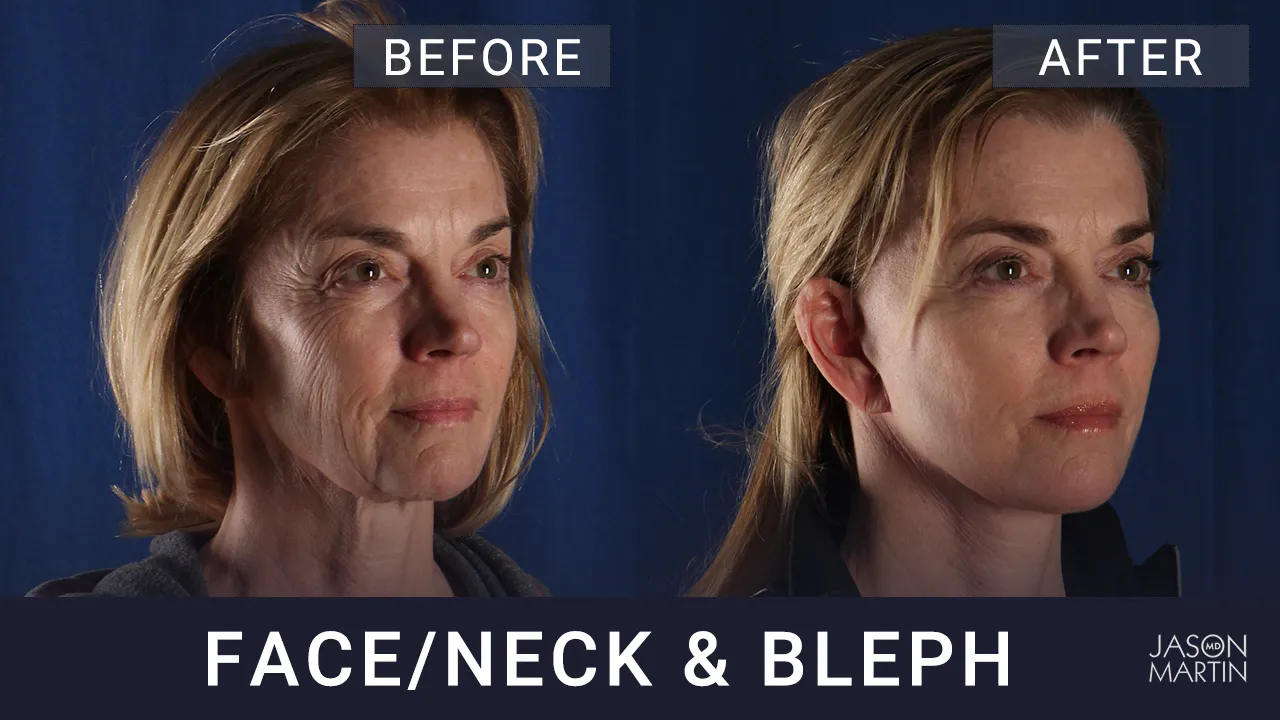
Prioritizes natural, balanced results over dramatic, pulled changes
-
Is honest about what surgery can and cannot do
Deep plane, SMASectomy, SMAS plication — they’re all tools. The artistry lies in choosing the right combination for you.
Ready to Talk About Your Foundation?
If you’re confused by all the facelift jargon and wondering which approach is actually right for your face, you’re not alone. We’d be happy to walk you through your options, explain how we’d treat your SMAS layer, and design a plan built around your anatomy and goals.
Schedule a facelift consultation with our office, and let’s talk a little about these techniques and more about what will keep you looking like yourself — just lifted, refined, and confidently refreshed.