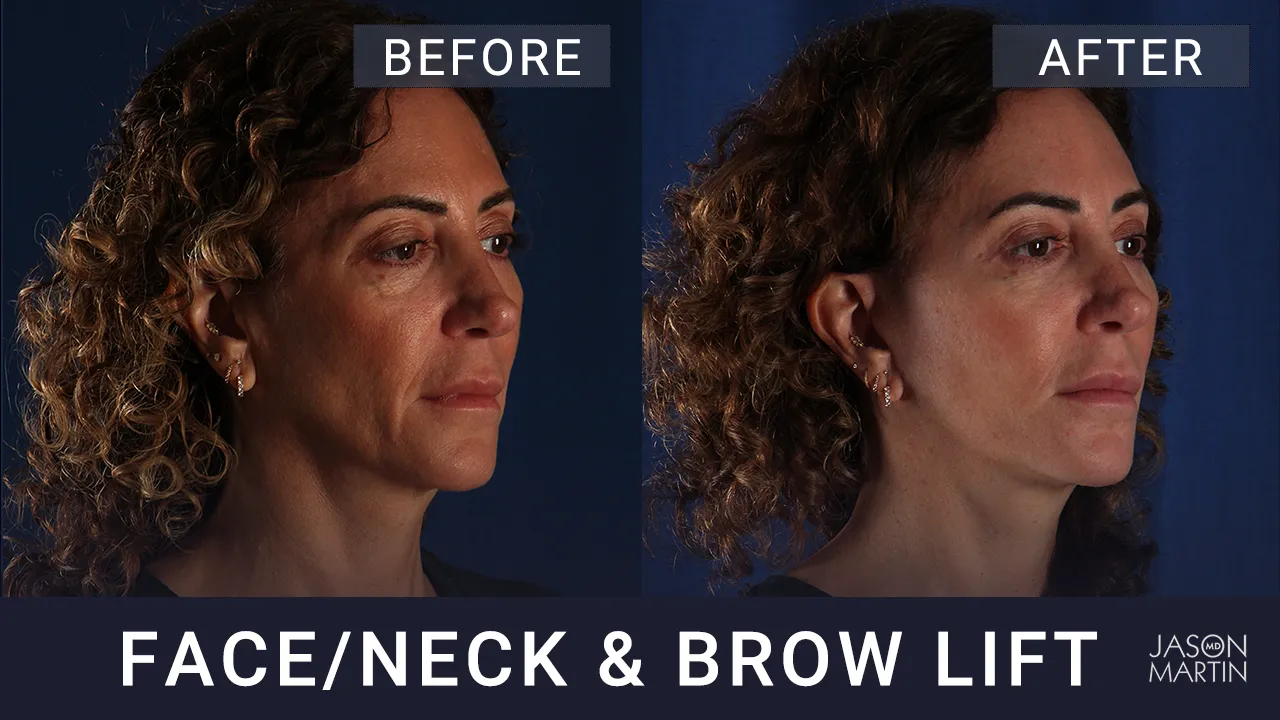
Let’s be honest: the morning after a facelift is not your best moment. Right after surgery, you’re going to be swollen, tender, numb, and a little weird-looking—especially if you had eyelid surgery at the same time. Some patients say, “I look like I’ve been in a boxing match.” We say: this is normal, temporary, and absolutely not the final result.
When we remove your first dressing, you are not seeing “the new you.” You are seeing a slightly swollen and bruised work-in-progress. You should withhold judgment of your facelift results on post-op day one. Or two. Or even seven. Give it a couple of weeks.
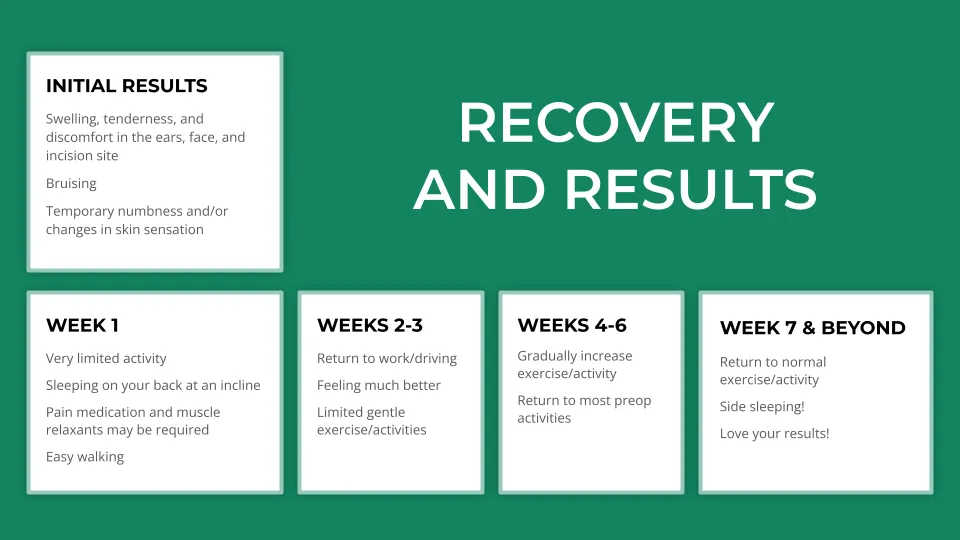
Week 1: Puffy, Tender, and Very Much in Progress
During the first week:
-
Swelling and bruising are expected, not a complication.
-
Your ears will be the grumpiest part of your body — that’s where most of the work and incisions are, and often where drains exit.
-
Pain levels are usually surprisingly low. On a 1–10 scale, most patients top out at 4–6 out of 10 on the first day or two, then quickly drop to mild soreness or tightness.
You’ll be sleeping on your back, slightly elevated, and taking it very easy. No, you will not be bedridden. We want you to walk gently around the house—it helps circulation and healing. Just think “gliding,” not “power walking.”
Weeks 2–3: Feeling Human Again (But Not Gym-Ready)
By the second week, almost everyone says, “Wow, I feel so much better than I did last week.”
You can expect to:
-
Feel more like yourself mentally and physically
-
Have less tightness and pressure
-
Still notice tenderness around the ears (especially when lying on your side or getting hugged too enthusiastically)
Many patients are back to desk work, Zoom calls, emails, and light errands during weeks 2–3. You might look “socially passable” with makeup and good lighting, but this is not the time for strenuous workouts.
Even if you feel ready, we ask you to avoid raising your heart rate and blood pressure—no Peloton, no HIIT, no heavy lifting. Elevated blood pressure can increase swelling, slow healing, and put more stress on your incisions. Your future jawline will thank you.
Weeks 4–6: Back to Life (With Some Limits)
Around weeks 4–6, most patients:
-
Gradually resume more normal exercise with our blessing
-
Travel, work, go out to dinner, attend events
-
Still notice occasional tightness, twinges, or ear tenderness—but nothing that limits daily life
Side sleeping usually becomes possible somewhere in this window, but the rule still applies: if it hurts, don’t do it yet. Healing isn’t a switch; it’s a dimmer slowly turning up.
Week 7 and Beyond: Enjoying the Payoff
By this point, you’re:
-
Back to *full activity*
-
Not thinking about your incisions every day
-
Watching swelling continue to refine and results sharpen
This is when the comments start: “You look amazing—did you go on vacation?” or “You look so rested!” That’s our favorite phase.
Love Your Results — and Don’t Wait Forever
Facelifts are transformative but natural when done well. They’re nuanced, subtle, and tailored to your unique anatomy. If laxity, jowling, or neck bands have been bothering you for years, waiting for a magic “right age” usually just means… more years of not liking what you see in photos.
If you’re healthy, realistic, and ready to feel more like yourself again, we’d be honored to help. Schedule a facelift consultation with our office, and we’ll walk you through your anatomy, projected recovery, and the kind of results we can realistically—and beautifully—achieve together.