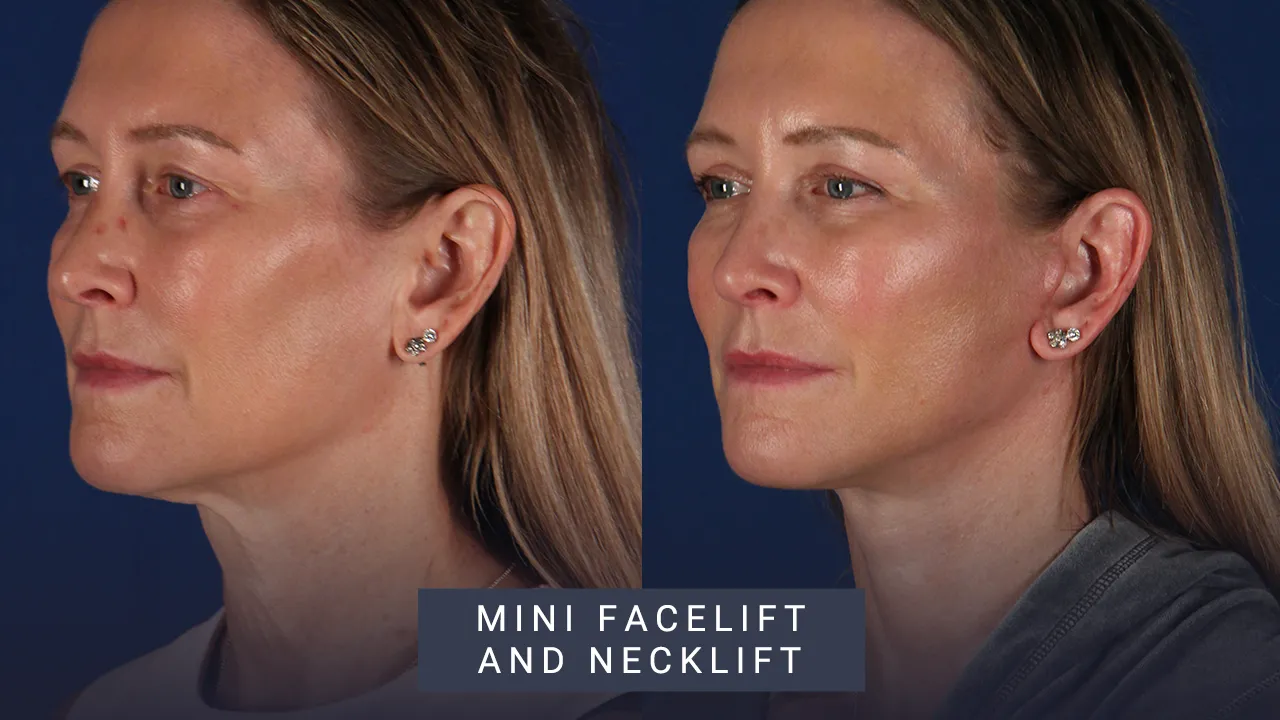
For more information, check out our podcast, Beauty and the Surgeon. Episode 133 covers everything you need to know about facelifts.
If you’ve convinced yourself that facelift recovery means weeks of agony on the couch, let’s clear that up right now: a facelift is usually one of the least painful surgeries we do.
People assume the opposite because the face is such a sensitive area. The logic goes: “Face surgery = face pain = this is going to be awful.” Add in some nightmare stories from the internet, and it’s no wonder “long and painful facelift recovery” is such a persistent myth.
Let’s break down what facelift recovery is actually like — pain, downtime, social life, and all.
Facelift Pain vs. Facelift Discomfort
First, a key distinction:
-
Pain = sharp, throbbing, “this really hurts.”
-
Discomfort = tightness, weird sensations, numbness, pressure.
Most facelift patients have very little true pain and a lot more of the “this feels tight/strange/swollen” type of discomfort. In our practice, it’s rare for patients to need prescription pain medication longer than 3–5 days, and many are off it much sooner. Some never touch the stronger meds at all.
Where does real pain show up? Usually in two places:
-
Around the ears – that’s where most of the work and incisions are.
-
At the drain sites – if your surgeon uses drains, those first couple of days while they’re in can be genuinely uncomfortable.
Once the drains come out, most people describe their pain as a 2–3 out of 10, more “tender” than “ouch.”
Why Facelift Recovery Feels Easier Than You Think
There’s a reason many patients say, “I can’t believe how easy that was” afterward:
-
The surgery works on skin and supporting tissue, not bone.
-
We use local numbing plus anesthesia, which reduces pain even after you wake up.
-
Most of the lingering sensations are tightness, numbness, or pulling — not sharp pain.
If you’re someone who hates the feeling of tightness or numbness (around the neck, jaw, or ears), you may feel like recovery is more intense, even if pain levels are low. That’s why we talk about this ahead of time — so those sensations don’t catch you off guard.
Physical Recovery vs. Social Downtime
“Facelift recovery” really has two parts:
-
*How you feel*
-
*How you look*
How You Feel
-
Expect to feel tired for about a week. That’s mostly from anesthesia and any prescription pain meds, not from the facelift itself.
-
The faster you wean off opioids (Norco, Percocet, etc.), the faster your energy and mental clarity return. These meds can make you groggy, nauseated, constipated, and oddly less aware of how well you’re actually doing.
-
Light walking is encouraged right away. You are not bedridden after a facelift — you just need to avoid real exercise.
How You Look
-
Bruising and swelling are normal and often look worse than they feel.
-
Hair down + a little makeup + good lighting can go a long way.
-
Many patients are comfortable on Zoom or back at a desk job within a few days to a week, depending on their comfort level about being seen mid-recovery.
If you have a major event — wedding, TV appearance, reunion — we typically recommend planning at least 6 weeks between your facelift and that big day. You’ll look good much sooner, but six weeks gives you margin to feel camera-ready, not just “fine.”
When Can I Get Back to Normal Life?
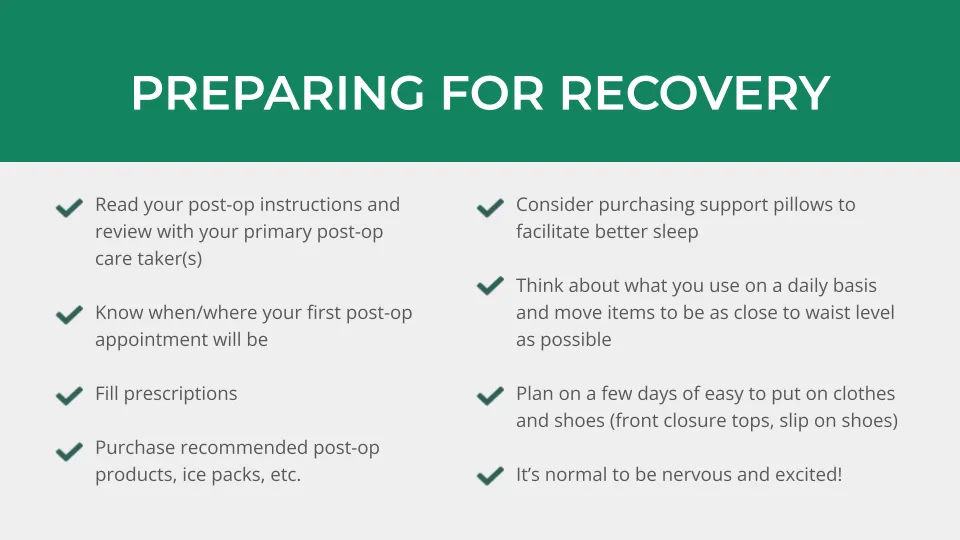
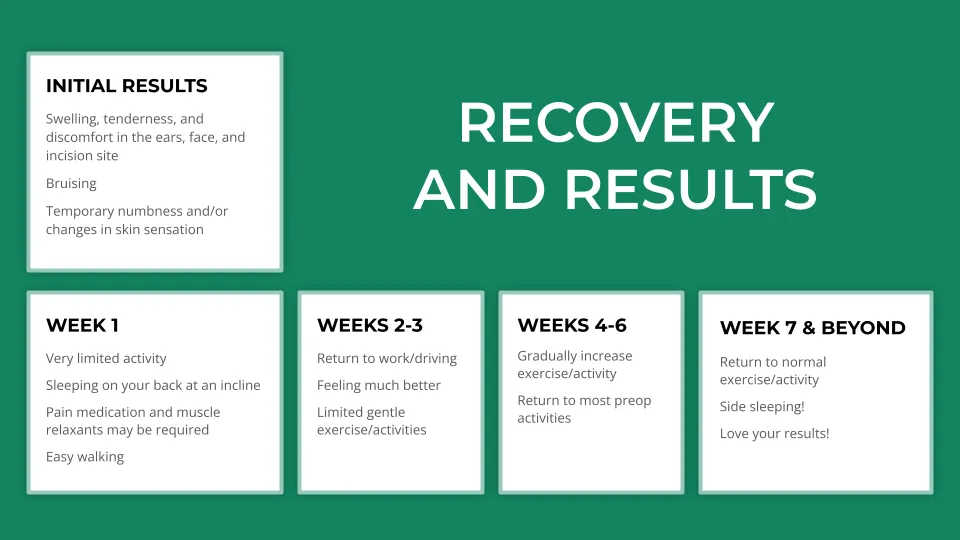
Everyone heals differently, but a typical facelift recovery timeline looks like this:
-
*Days 1–3:* Drains (if used), tightness, swelling, bruising, ears and drain sites sore. Rest, walk gently, keep head elevated.
-
*Days 4–7:* Much more comfortable, many patients on Tylenol only. Still swollen/bruised, but clearly on the upswing.
-
*Weeks 2–3:* Feeling significantly better. Many patients back to work (especially desk work), driving, light errands. Still no gym, no heavy lifting, no “I’ll just ride the Peloton a little.”
-
*Weeks 4–6:* Gradual return to exercise as cleared by your surgeon. Swelling and stiffness continue to improve.
-
*After Week 6:* Back to full activity for most people. You’re living your normal life, just with a sharper jawline and smoother neck.
So… Is Facelift Recovery Long and Miserable?
For the vast majority of patients: no.
It’s not painless — you’ll have tightness, weird sensations, and a few days of real soreness. But the idea that you’ll be suffering on the couch for weeks is one of the biggest facelift myths. Most patients are shocked by how manageable it is and how quickly they feel like themselves again.
If fear of a long, painful recovery is the only thing standing between you and a fresher, more confident version of yourself, it might be time to get real information instead of relying on horror stories.
*What would facelift recovery look like for you?* Schedule a consultation with our office. We’ll review your health, your goals, your timeline — and give you a personalized, honest picture of what to expect from facelift surgery and recovery, not the myth version.